
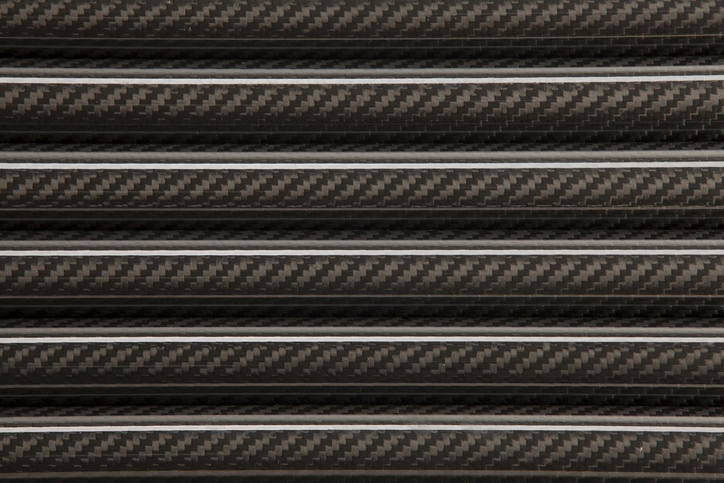
First, Focus on the Primary Composite Materials
Ensuring consistent composite part quality is a top priority for manufacturers using composites to produce components across automotive, aerospace, oil & gas, and defense applications. With companies devoting vast resources to this need, it follows that the materials themselves must be top-notch — especially when it comes to the consolidation of composites and resins. Even minor shortcomings in materials can lead to failure.
The first step in ensuring consistent composite part quality is understanding the composite itself. There are many grades of composites. For example, carbon fiber can vary widely based on its precursor material, its mechanical properties, and its performance capabilities after curing. Kevlar, too, varies based on how it will be used; often it’s associated with defense applications, but it has industrial uses as well that require different grades. Even fiberglass has different grades according to its use case.
The resin system being used in conjunction with the composite material also plays a critical role in part performance and influences the manufacturing process. Vinyl esther, epoxy, polyester, and phenolic resins are all common with composites, offer different performance characteristics, and will influence production methods. Additionally, new resin systems are being developed — such as UV-cured resin systems — that are incompatible with previous production processes.
Next, Ensure You Have Proper Compaction
There are many methods for compaction of composite materials and resins — with and without heat being applied. Examples include cellophane, woven nylon, various shrink films, and shrink tape. These materials are applied ahead of a curing process, such as using a vacuum bag, an autoclave, or an oven.
While each of these compaction solutions and processes has its purpose, overall production must be considered as well. For example, many of these compaction materials don’t shrink on their own when heat is applied — compaction force must be created via tension and overwrapping, most of which has to be done by hand. This translates into more material being used as well as labor.
Even automation must be factored in. Shrink tapes are often usable in automated processes, such as with traverse winders and other equipment types. Understanding how the tape will be applied via these automated systems is critical to performance outcomes.
The heat source being used for curing also makes a production impact, requiring more time to move parts in and out of the unit, such as with an autoclave or oven, or manually applying heat, such as with a heat gun.
Understanding the pressures that your parts will be exposed to is critical here. Everything mentioned thus far will impact the ability of those parts to withstand pressure and other physical stressors — whether it’s the isolated, infrequent use of a sporting goods pole or prolonged exposure to heat and pressure in oil and gas fluid transfer.
Know What the Risks Are
With a clear understanding of everything that has been discussed thus far, you’ll be able to implement a consistent production process that ensures the core composite material, corresponding resin system, and curing method are synergistic and will result in the best possible outcome. However, it is still worth describing the potential risks associated with composites. If you begin to see any of these in your production process, you may need to make some adjustments:
- Voids and porosity — These are usually caused by a failure in the compaction of the composite material and resin. Insufficient pressure or heat means that the resin is unable to penetrate into the fibers or layers of the composite, so it is not filled, or gas is unable to escape the layup.
- Foreign object debris (FOD) — This is the presence of unwanted material in the layup. This can occur for numerous reasons, but compaction is critical in forcing those materials out of the composite.
- Delamination — This is the separation of layers in the composite material. Insufficient compaction is a leading cause here.
- Surface finish issues — Inconsistent compaction or misapplication of the materials can lead to variance in the surface finish, which may lead to part performance issues or rejection during quality inspections.
Get the Right Solution for Your Application
Whatever composite part you’re manufacturing, consistency in the production process is key — as is ensuring you’re using the right materials. Dunstone partners with manufacturers of composite parts worldwide to provide them with an efficient, cost-effective, and highly tailored shrink tape solution. We offer a complete range of Hi-Shrink Tape products, ranging from our popular and adaptable 200 Series to our extreme high-temperature HT Series and X Series.
Request a complimentary sample of our tapes here, or connect with our engineering team to discuss your application for a more tailored solution.