
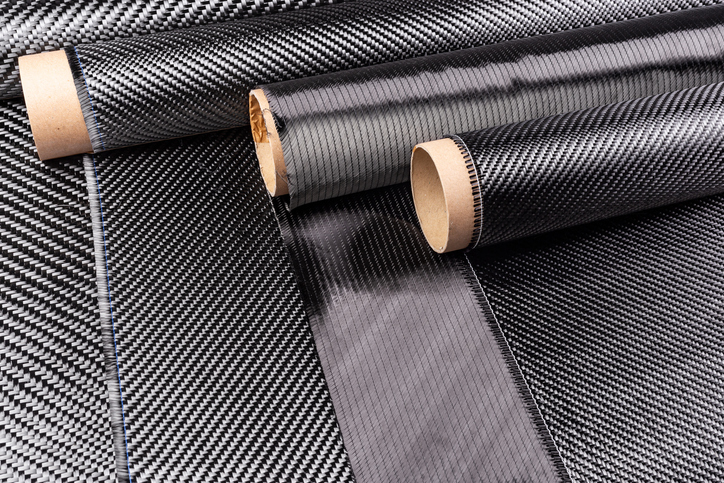
Solving Common Prepreg Carbon Fiber Consolidation Challenges
Prepreg carbon fiber, also known as carbon fiber pre-impregnated with resin, offers manufacturers a controlled, consistent starting point for producing high-performance composite parts. Unlike wet layup processes where resin is applied manually, prepreg arrives ready to use with precise fiber-to-resin ratios. But achieving the performance potential of prepreg carbon fiber tape requires proper consolidation during the cure cycle. When consolidation falls short, manufacturers face quality issues that directly impact part performance and production efficiency.
Understanding how to properly consolidate prepreg carbon fiber tape and recognizing when your current process is creating problems is essential for producing aerospace components, automotive parts, sporting goods, and other applications where strength-to-weight ratios and dimensional precision are non-negotiable.
Three Critical Problems in Prepreg Carbon Fiber Manufacturing
1. Inconsistent Straightness and Dimensional Accuracy
Small-diameter parts like arrow shafts, golf club shafts, and telescoping poles require perfect straightness and uniform wall thickness. When prepreg carbon fiber tape isn’t consolidated properly during cure, resin flows unevenly, and fibers shift position. The result? Parts with straightness variations that force manufacturers to downgrade products to lower-value “Grade B” categories, directly impacting profitability.
The root cause is often inadequate compressive force during the critical consolidation window — when resin viscosity drops and fibers need maximum pressure to maintain position. Non-shrink compaction films provide initial pressure but relax as cure temperatures rise, allowing fibers to move when they should be locked in place.
2. Surface Defects from Trapped Volatiles
During the cure cycle, prepreg carbon fiber tape releases volatiles, gases, and vapors from the resin system. If these volatiles can’t escape, they create surface bubbles, dry spots, and delamination between plies. These defects aren’t just cosmetic; they compromise the mechanical properties that make carbon fiber valuable in the first place.
This problem intensifies with certain resin systems that produce higher levels of outgassing. Traditional consolidation methods trap these volatiles under solid compaction layers, creating quality issues that lead to scrap, rework, and reduced yields of premium-grade parts.
3. Incomplete Resin Penetration and Void Formation
Voids, the empty spaces within the resin matrix, represent one of the most serious defects in advanced composites. These gaps reduce tensile strength, create stress concentration points, and shorten part lifespan. In demanding applications like aerospace structures or pressure vessels, voids can lead to catastrophic failure.
Voids form when compressive force is insufficient to push resin completely through fiber layers and eliminate air pockets. The challenge intensifies with prepreg carbon fiber tape because the resin is already partially cured (B-staged), giving manufacturers a narrow processing window to achieve complete fiber wet-out before the resin system fully cross-links.
How Shrink Tape Solves Prepreg Consolidation Problems
Unlike non-shrink films that relax as temperatures increase, heat shrink tape for prepreg carbon fiber provides compressive force that increases throughout the cure cycle. This means peak pressure occurs precisely when resin viscosity is lowest, at the critical moment for achieving complete consolidation.
For straightness and dimensional issues, shrink tape, like the 200 Series, applies consistent force across the entire part length. At just 0.002″ thick, this solution allows higher wrapping tension during application while providing additional consolidation during cure. Manufacturers of sporting goods shafts report significant increases in Grade A yields and reduced labor time compared to non-shrink alternatives.
For volatile management, perforated shrink tape allows gases to escape while maintaining compressive force. The perforations actually enable gaseous volatiles to vent, preventing surface bubbles and dry spots. This is particularly valuable for resin systems that produce substantial outgassing during cure.
For void elimination, shrink tape’s increasing compressive force ensures resin penetrates completely between fiber layers. Independent testing published in Composites Science and Technology demonstrated that specimens using Dunstone 220R Hi-Shrink Tape showed significantly reduced voids and delamination compared to specimens without external compaction, resulting in higher tensile strength values.
Application Considerations for Prepreg Carbon Fiber Tape
Success with shrink tape consolidation depends on matching tape properties to your specific prepreg system and part geometry. Key variables include:
- Tape thickness – Thin-walled parts (0.001″-0.002″ tape); thick-walled parts (0.003″-0.005″ tape)
- Shrink percentage – Available from 5% to 20%, depending on the required compressive force
- Cure temperature – Standard polyester tapes for temperatures up to 165°C; specialized materials for extreme temperatures up to 400°C
- Release coatings – Enable easy tape removal post-cure without grinding or scraping
- Perforations – Essential for resin systems with high volatile content
The 200 Series is often described as the “Swiss Army knife” for prepreg applications, offering versatility for thin-walled composite parts with options for release coatings and perforations. For applications requiring maximum compressive force, such as thick-walled structures or challenging resin systems, the 500 Series delivers the pressure needed for complete consolidation.
Beyond standard offerings, custom formulations address unique prepreg challenges. Narrow tape widths enable automated winding equipment for complex geometries. Specific shrink percentages optimize force for particular fiber-resin combinations. Silicone release coatings simplify post-cure processing for cosmetically critical parts.
Optimizing Your Prepreg Consolidation Process
Proper consolidation transforms prepreg carbon fiber tape from a material with potential into parts with predictable, superior performance. When compressive force increases throughout the cure cycle rather than relaxing, manufacturers achieve the dimensional precision, surface quality, and mechanical properties that define premium-grade composites.
Dunstone’s engineering team has over 65 years of experience helping manufacturers optimize prepreg consolidation processes. Whether you’re producing aerospace tubes, automotive drive shafts, or small-diameter sporting goods, proper tape selection and application technique make the difference between acceptable and exceptional results.
Request a complimentary sample of Hi-Shrink Tape to test with your prepreg system, or connect with our engineers to discuss consolidation challenges specific to your application.